
The short answer
Indoor air quality service means finding out why your home's air feels dusty, stuffy, humid, or smelly, then fixing the cause in your HVAC system. Many problems can be solved with better filtration, duct repairs, or airflow adjustments, and add-on equipment is only worth it when the basics are already working.
Indoor air quality depends largely on what your heating and cooling system pulls in, filters, and pushes back out. In Livermore and the rest of the Tri-Valley, dry summers bring dust, pollen, and the occasional smoky stretch. In winter, closed-up homes can trap moisture, odors, and stale air. TotalFlow HVAC Repair Service looks at your whole system, including the filter, ductwork, airflow, humidity, and ventilation, to find what's actually affecting the air in your home. We serve Livermore, Pleasanton, Dublin, San Ramon, and nearby communities, and we explain what we find before recommending anything.
Signs Your Home Needs an Indoor Air Quality Check
Air quality problems rarely announce themselves directly. They usually show up as small annoyances that don't go away with regular cleaning. If several of these sound familiar, your HVAC system is a good place to start looking.
- Dust settles on furniture within a day or two of cleaning.
- Allergy or sinus symptoms seem worse indoors than outside.
- Musty, stale, or burning smells come from the vents when the system runs.
- Some rooms feel stuffy or noticeably warmer or cooler than others.
- Windows fog up in winter, or you see condensation or mildew in bathrooms and closets.
- Smoke smell lingers inside for days after a nearby fire or a smoky day outdoors.
- Your filter looks clogged well before it's due, or you can't remember the last time it was changed.
What We Check During an Indoor Air Quality Visit
We start with the equipment that moves air through your home, because a filter upgrade won't help much if air is bypassing it or leaking out of the ducts. Our technician inspects the parts of the system that most often affect what you breathe.
- Filter type, size, fit, and condition, including gaps that let air slip around it.
- Filter rack and return air openings for leaks that pull in attic or crawlspace dust.
- Visible ductwork for disconnected, crushed, or poorly sealed sections.
- Blower and blower compartment for buildup that gets blown back into living spaces.
- Evaporator coil and condensate drain for moisture, slime, or standing water.
- Airflow at supply and return vents to spot restrictions or imbalanced rooms.
- Indoor humidity levels and how the system handles moisture across seasons.
- On gas furnaces, the heat exchanger area and venting for signs of combustion problems.
Repair or Replace: Your Options
Most indoor air quality problems are fixed with repairs and adjustments, not new equipment. A properly sized filter that fits snugly, sealed return leaks, a cleaned blower, and a clear condensate drain often make a noticeable difference on their own. We'll tell you if that's all your home needs.
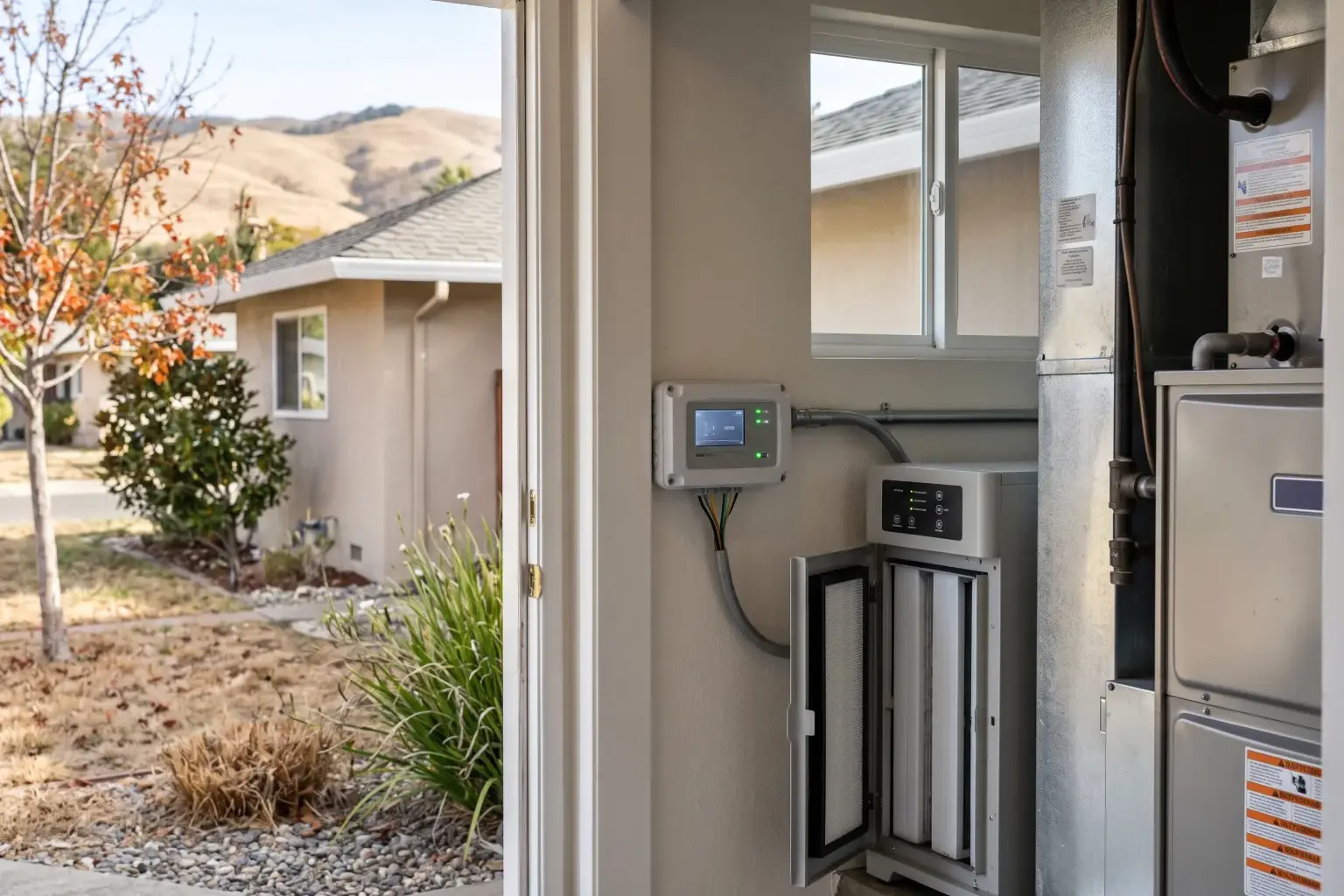
When the basics are in good shape but problems remain, add-on equipment can help. The right choice depends on what's causing the issue, so we match the option to what we found during the inspection rather than recommending a standard package.
Sometimes poor air quality points to a larger problem with aging equipment, such as a failing furnace or an air conditioner that no longer controls moisture well. In those cases we'll walk you through repair and replacement side by side. If a gas furnace is involved, it helps to know that Bay Area Air District rules don't require replacing working equipment, but gas furnaces manufactured from 2029 on must meet a zero-NOx standard, which in practice points many homeowners toward heat pumps when a furnace is eventually replaced.
- Higher-efficiency media filters and properly sealed filter cabinets.
- Duct sealing and repair of damaged or disconnected runs.
- Whole-home air cleaners for homes dealing with dust, pollen, or smoke.
- Ventilation upgrades that bring in filtered fresh air in tightly sealed homes.
- Humidity control for homes with ongoing moisture or condensation problems.
What Affects the Cost
Every home is different, so we don't quote a flat price for indoor air quality work. The final cost depends on what's causing the problem and how much work it takes to fix it. These are the main factors:
- Whether the fix is a simple repair or adjustment, or calls for new equipment.
- How easy it is to reach your ductwork, especially in attics and tight crawlspaces.
- The amount of duct sealing or replacement needed.
- The type and size of filtration or air cleaning equipment you choose.
- Whether your existing system needs modifications to fit new components.
- The age and condition of your furnace, air handler, or air conditioner.
How a Visit Works
When you contact us, we'll ask what you're noticing, which rooms are affected, and how long it's been going on. That helps our technician come prepared and focus on the most likely causes.
At your home, the technician inspects the system, checks airflow and humidity, and looks at the ductwork that can be reached. We'll show you what we find, such as a dirty coil, a gap around the filter, or a disconnected duct, so you can see the problem for yourself.
Before any work begins, we explain your options in plain terms and give you a written estimate. Many repairs can be handled during the same visit. Larger jobs, like duct replacement or new equipment, are scheduled at a time that works for you.
After the work is done, we'll explain how to keep the improvement going, including which filter to buy, how often to change it, and what signs mean it's time to call us again.